

Introduction: Restoring Center of Gravity Awareness
Postural balance is a complex physiological process coordinated by the integration of visual, vestibular, and somatosensory inputs in the brainstem and cerebellum. A stroke frequently damages these regulatory pathways, causing asymmetric weight-bearing, impaired protective reactions, and severe fear of falling. Re-establishing center-of-gravity awareness through structured balance therapy is the fundamental milestone required for safe, unassisted mobility and community ambulation.
Common Symptoms
Post-stroke balance and postural stability impairments include:
- Persistent lateral postural lean toward the non-affected side or active pushing toward the hemiplegic side (Pusher Syndrome)
- Inability to sustain steady standing balance without external manual or structural support
- Loss of protective stepping strategies when balance is gently perturbed
- Extreme hesitation, anxiety, and fear of falling during walking or turning
- Stumbling or shuffling gait with irregular step length and wide base of support
- Difficulty maintaining equilibrium with eyes closed or in dimly lit rooms
- Inability to safely navigate uneven terrain, thresholds, or curbs
Causes & Clinical Diagnosis
Etiology and clinical balance assessment:
- Damage to motor cortices, internal capsule, or cerebellar pathways regulating equilibrium
- Impaired proprioceptive feedback from mechanoreceptors in the lower extremity and foot sole
- Clinical diagnosis entails objective balance instrumentation (Berg Balance Scale, Timed Up and Go [TUG], Dynamic Gait Index [DGI]) and sensory organization testing.
Pathophysiology & Biomechanical Impact
When stroke impairs somatosensory processing in the paretic leg, the brain cannot accurately calculate where the body is in space. In response, the patient shifts up to 80% of body weight onto the sound limb. This asymmetric loading causes abnormal pelvic tilt, excessive energy expenditure during gait, rapid muscular exhaustion, and severe joint shear stress on the unaffected knee and hip.
Evidence-Based Physiotherapy Protocols
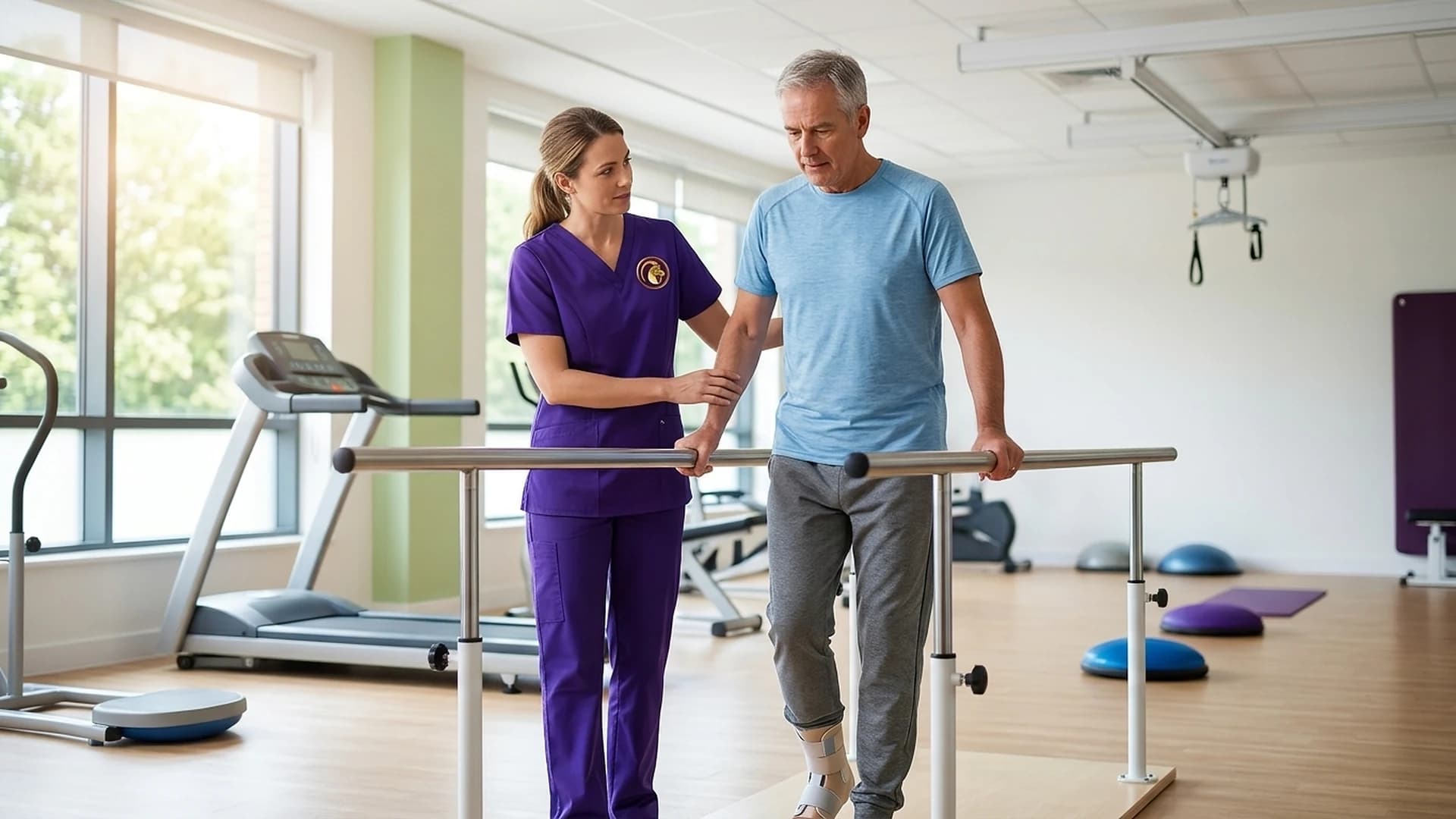
Aries PhysioCare implements progressive, clinician-monitored balance protocols:
- Center of pressure biofeedback: Training bilateral symmetrical weight-bearing using specialized balance platforms and visual targets
- Perturbation training: Controlled manual balance perturbations delivered by the therapist to re-educate automatic postural reactions
- Vestibular and visual integration: Systematically challenging balance with head turns, narrow base of support, and compliant foam surfaces
- Dual-task cognitive and motor conditioning: Practicing walking while performing mental calculations or carrying objects under close guarding
- Aquatic-simulated or harness-supported unweighted gait training where appropriate to safely build endurance
- Precise assistive device prescription and custom fitting to guarantee maximum stability during functional walking
Home Care & Ergonomic Strategies
Mitigating fall hazards and fostering safe mobility within the living space:
- Install non-slip rubber treads on steps and ensure grab bars are mounted near all transition zones
- Maintain clear, unobstructed walking corridors free of low furniture, throw rugs, or pet toys
- Wear firm, supportive footwear with non-skid rubber soles both indoors and outdoors
- Avoid rushing to answer telephones or doorbells; deliberate, steady movements prevent precipitous loss of balance
- Ensure nightlights are placed throughout hallways and bathrooms to assist visual orientation during nocturnal awakenings
- Never attempt unassisted ambulation without your prescribed assistive device until formally cleared by your therapist
When to Contact Us
Do not let balance insecurity confine you to a chair. Contact Aries PhysioCare today for a comprehensive home balance assessment and structured fall-prevention physical therapy program.