


Introduction: Understanding Lower Back Rehabilitation
Lower back pain (LBP) is the leading global contributor to physical disability and restricted occupational productivity. Whether driven by acute facet sprain, lumbar disc herniation, spinal canal narrowing, or chronic postural exhaustion from sedentary computer tasks, evidence overwhelmingly indicates that structured, home-based physical rehabilitation produces superior long-term clinical outcomes compared to prolonged bed rest or pharmacological masking.
Common Symptoms
Patients experiencing mechanical or neural lower back dysfunction present with distinct signs:
- Dull, aching pain localized to the lumbosacral junction
- Radiating electric sensations or numbness extending down the gluteal fold and leg
- Morning spinal stiffness requiring 30 or more minutes of gentle activity to loosen
- Sharp, catching pain during transitions from seated to standing postures
- Defensive paraspinal muscular spasms and trunk antalgic deviation
- Difficulty with prolonged standing or unassisted walking past 15 minutes
- Sleep disruption when turning in bed or lying on a flat mattress
Causes & Clinical Diagnosis
The etiology of lower back disorders involves multifactorial musculoskeletal and neurological strains:
- Sustained lumbar flexion and unergonomic desk seating increasing hydrostatic disc pressure
- Improper lifting mechanics transferring compressive shear loads directly to L4-S1 motion segments
- Degenerative disc changes, annular micro-tears, and facet joint arthrosis
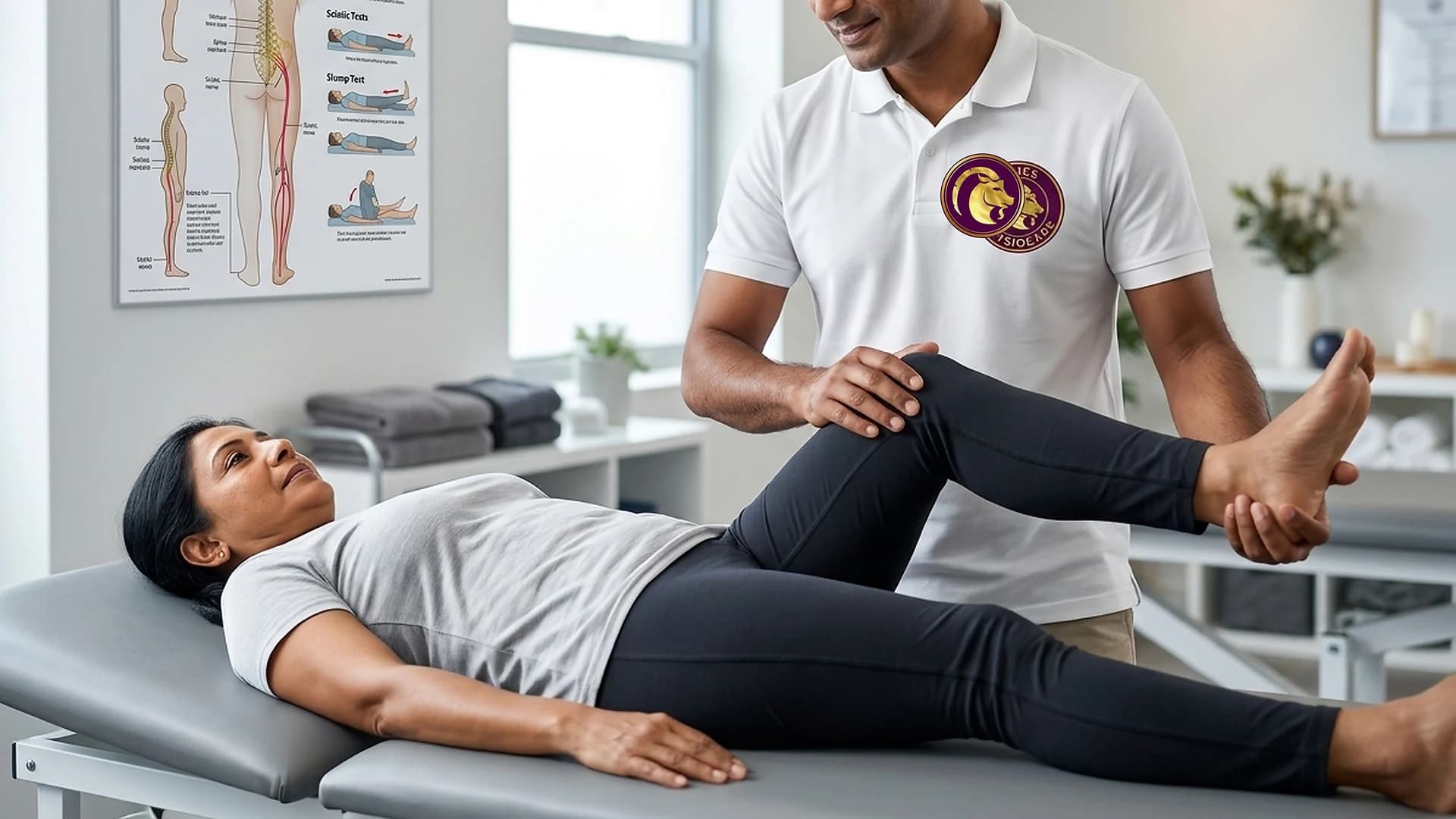
- Clinical diagnosis entails directional preference evaluation (McKenzie MDT), neural tension testing (Straight Leg Raise, Slump test), and segmental joint palpatory examination.
Pathophysiology & Biomechanical Impact
When lumbar spine segments undergo chronic asymmetric loading, the intervertebral discs experience uneven mechanical stress. The nucleus pulposus shifts against attenuated annular fibers, while adjacent facet joints bear excessive compressive loads. In response, local paraspinal muscles develop reflexive ischemic hypertonicity to splint the motion segment, precipitating a self-perpetuating cycle of pain, hypomobility, and muscular inhibition.
Evidence-Based Physiotherapy Protocols
At Aries PhysioCare, our visiting clinical physiotherapists deliver hospital-grade multimodal care at home:
- Mechanical Diagnosis and Therapy (MDT / McKenzie Method) to identify directional preference and centralize radiating pain
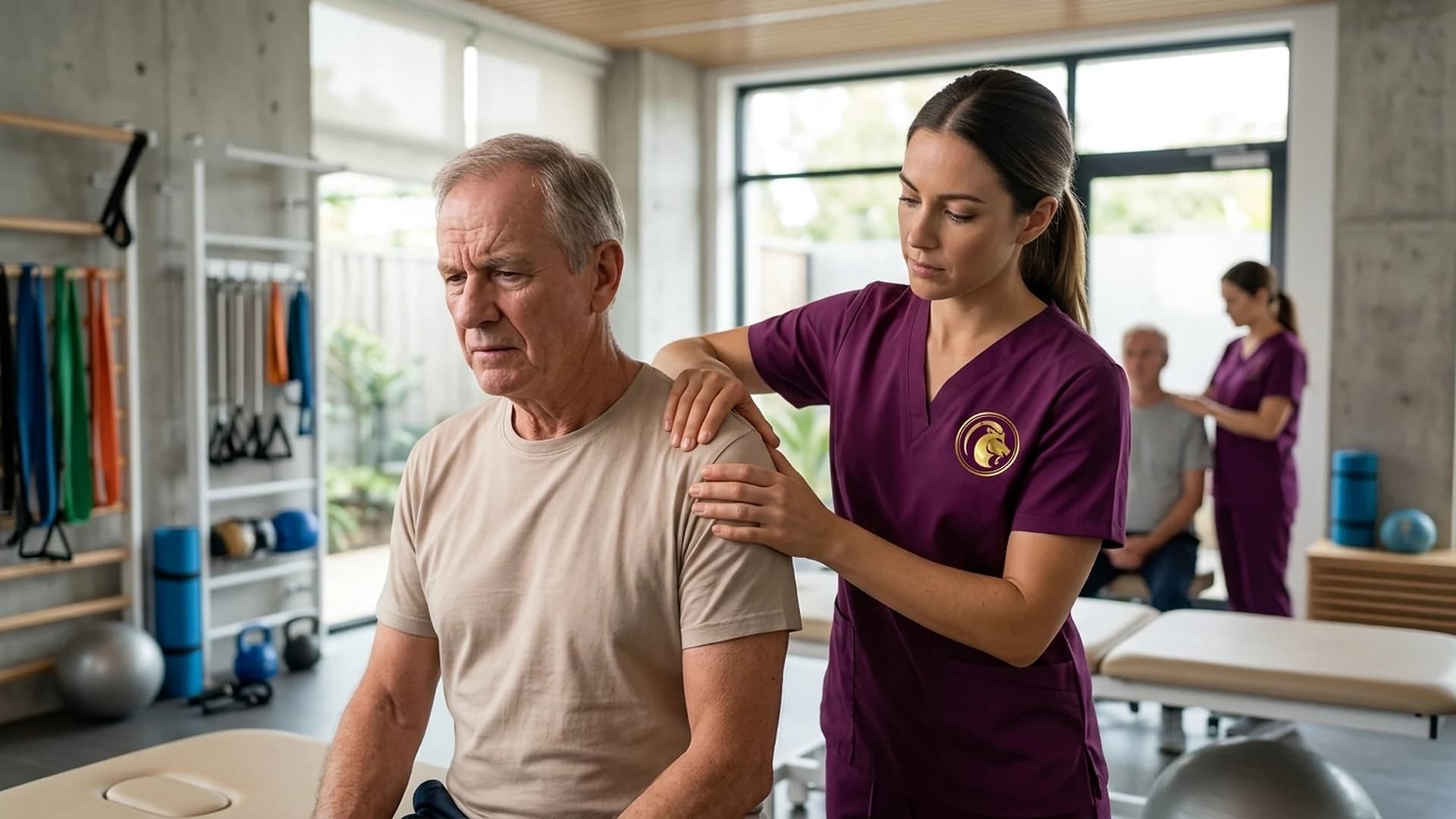
- Targeted manual therapy: Passive Maitland joint mobilizations and gentle myofascial release to restore segmental gliding
- Advanced clinical electrotherapy: Calibrated Interferential Therapy (IFT) and Class-IV Laser to downregulate nociceptive nerve firing
- Supervised motor control retraining: Retraining deep transversus abdominis and multifidus firing without compressive spinal loading
- Progressive functional movement re-education: Transitioning to guided lumbopelvic rhythm and safe hip-hinge mechanics
Home Care & Ergonomic Strategies
Adopting supportive daily habits prevents symptom recurrence:
- Configure workstations with ergonomic lumbar support cushions, monitor at eye level, and forearms resting parallel to the desk
- Implement scheduled posture resets: Stand and move gently for 2 minutes every 30 to 45 minutes
- Avoid continuous bed rest beyond 24 to 48 hours; gentle active walking promotes disc fluid exchange
- Optimize nocturnal spine alignment with a supportive mattress and a pillow under the knees (supine) or between the knees (side sleeping)
- Apply cryotherapy packs for 15 minutes post-exertion to manage inflammatory flare-ups
- Refrain from unsupervised twisting or heavy lifting until cleared by your therapist
When to Contact Us
If lower back pain persists beyond 7 days, radiates down your legs, or interferes with daily function, contact Aries PhysioCare for a comprehensive in-home physiotherapy evaluation. Seek emergency care immediately if you experience loss of bladder or bowel control or progressive leg weakness.