


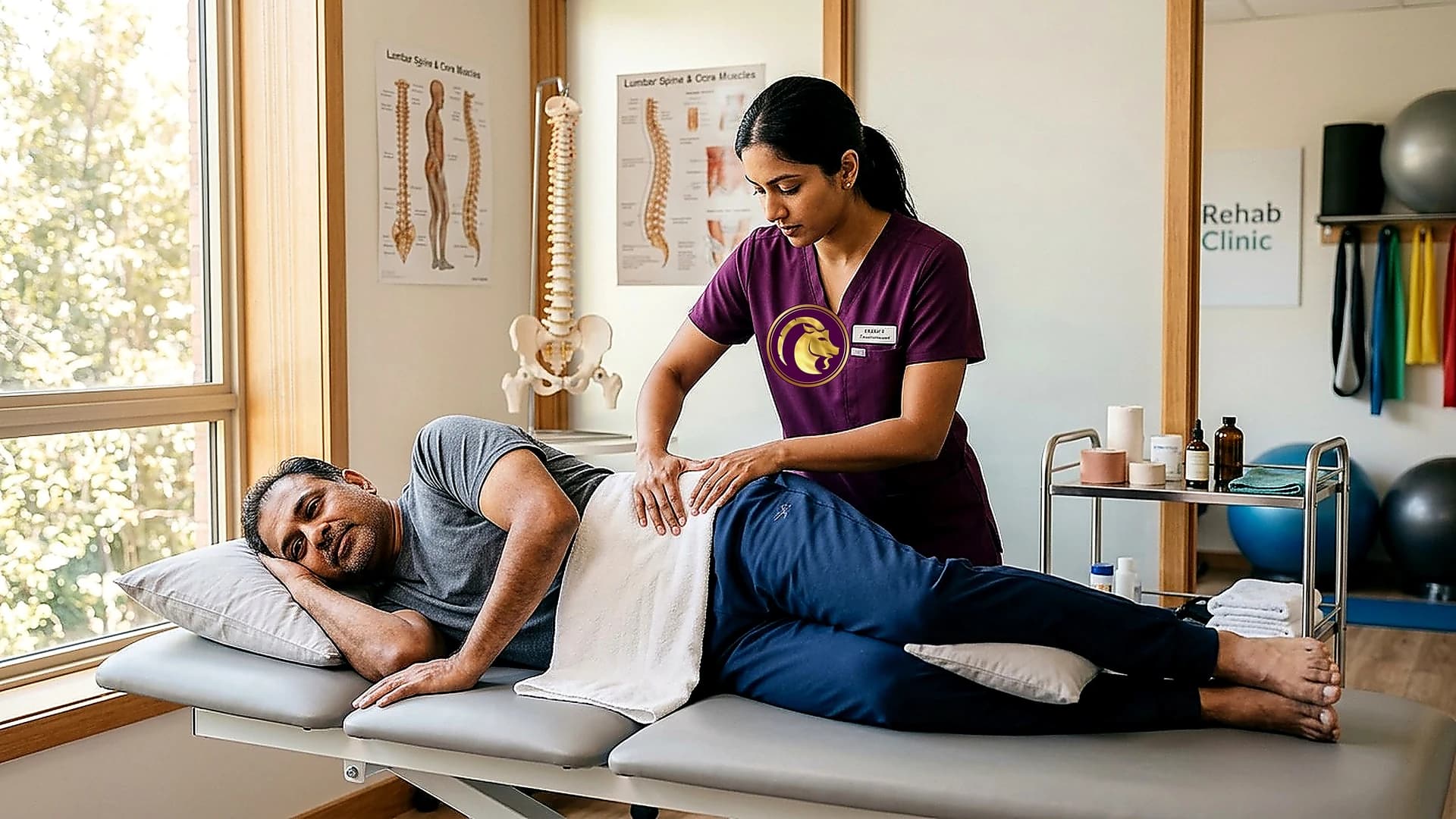

Introduction: Understanding Lumbar Hyperlordosis
Lumbar lordosis is the natural inward C-shaped curve of the lower back that cushions axial shock during walking and running. However, when this inward curve becomes excessively exaggerated—a condition known as lumbar hyperlordosis or "swayback"—the delicate biomechanics of the pelvis and spine are disrupted. Characterized by an excessive anterior pelvic tilt where the tailbone points upward and the abdomen protrudes forward, hyperlordosis places immense compressive stress on the posterior facet joints and lumbar intervertebral discs.
Common Symptoms of Hyperlordosis
Postural distortion signs:
- Exaggerated inward curve in the lower back with a prominent, protruding abdomen and buttocks
- Aching tightness in the lower back after standing or walking for more than 15 minutes
- Difficulty lying flat on your back on a firm mattress without a significant gap under the lumbar spine
- Tightness in the front of the hips (psoas, rectus femoris) and lower back extensors
- Pain aggravated by wearing high-heeled shoes or standing tall
- Weakness or lack of engagement in the gluteal muscles during stair climbing
- Occasional pinch in the facet joints when arching backward
Causes & Clinical Diagnosis
Primary biomechanical drivers:
- Prolonged seated desk work causing chronic adaptive shortening of the iliopsoas muscles
- Weakness and elongation of the deep abdominal wall (transversus abdominis, rectus abdominis)
- Gluteal amnesia—inhibition of the gluteus maximus failing to pull the pelvis into neutral
- Excess abdominal adiposity or pregnancy shifting the center of gravity forward
- Diagnosis involves evaluating the Anterior Superior Iliac Spine (ASIS) to Posterior Superior Iliac Spine (PSIS) pelvic angle and the Thomas test for hip flexor contracture.
Pathophysiology & Biomechanical Impact
The anteriorly tilted pelvis forces the L4-L5 and L5-S1 facet joints into constant jammed approximation. The posterior annular disc fibers experience high shear forces, increasing the vulnerability to facet joint arthropathy, spondylolysis, and isthmic slippage.
Evidence-Based Physiotherapy Protocols
- Deep myofascial release and active stretching of the iliopsoas, rectus femoris, and tensor fasciae latae (TFL)
- Lumbopelvic neutral posture re-education and therapist-guided core co-contraction in functional standing postures
- Supervised clinical gluteal reactivation and posterior chain facilitation protocols
- Therapist-monitored neutral spinal core bracing to stabilize the lumbopelvic junction
Home Care & Ergonomic Strategies
- Maintain neutral lumbopelvic alignment habits during seated and standing daily activities
- Avoid wearing high-heeled shoes, which tip the pelvis forward and exaggerate lumbar lordosis
- Sleep on your side with a pillow between knees, or on your back with a large pillow under your knees
- Stand with equal weight distribution, actively engaging your lower abdominals and gluteals
When to Contact Us
Restore balanced pelvic alignment and relieve chronic lower back fatigue. Contact Aries PhysioCare for expert home physiotherapy and personalized pelvic alignment therapy.