

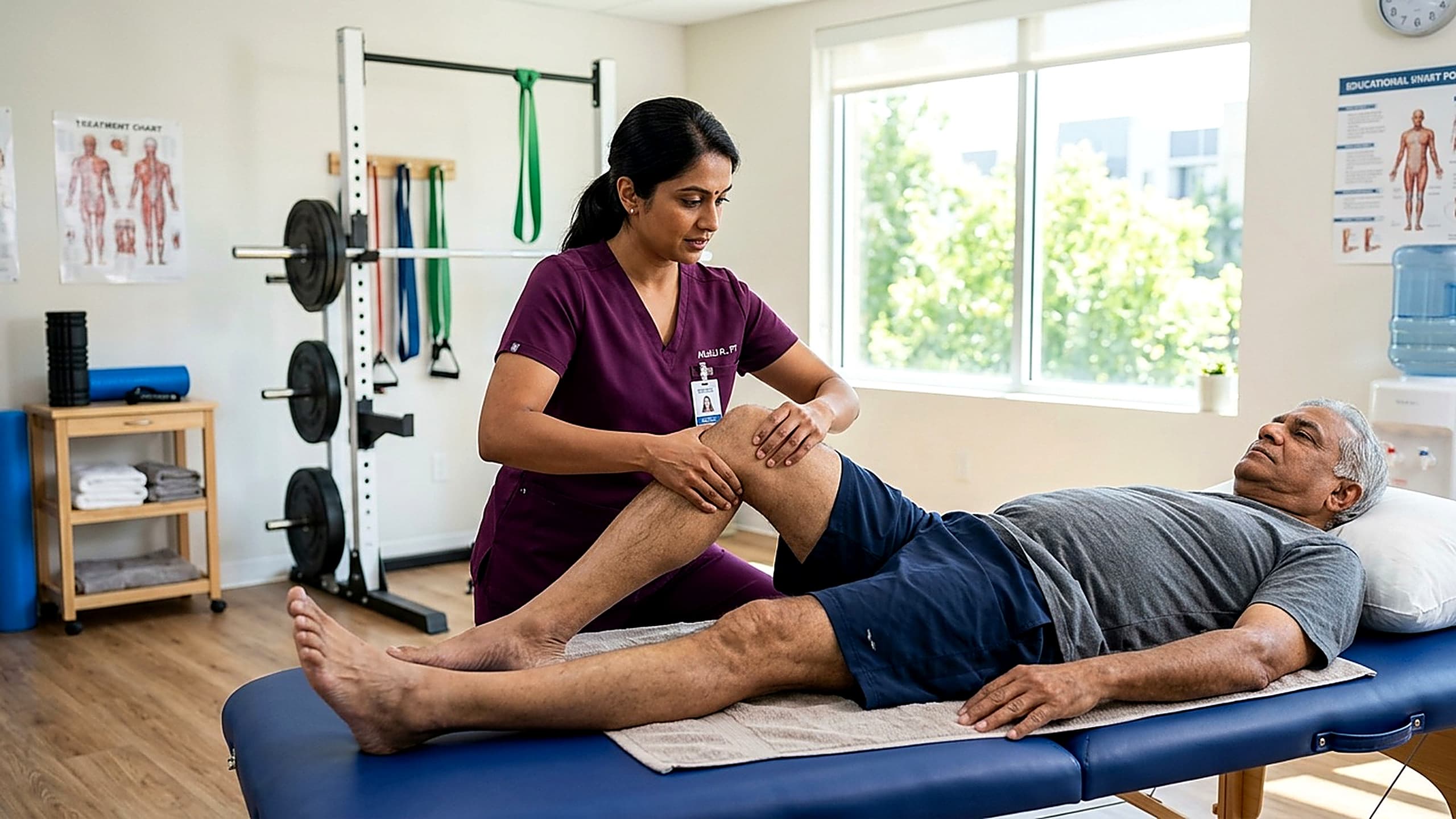
Introduction: Understanding Knee Osteoarthritis
Osteoarthritis (OA) of the knee is a degenerative articular cartilage disorder affecting millions of active adults and seniors. It is characterized by the progressive thinning of hyaline cartilage, subchondral bone remodeling, and secondary synovial inflammation. International orthopedic guidelines affirm that targeted, evidence-based physiotherapy is the essential first-line intervention to preserve joint space, reduce mechanical stress, and postpone or eliminate the necessity of surgical total knee replacement.
Common Symptoms
Degenerative knee changes manifest through characteristic functional and mechanical signs:
- Persistent aching pain in the medial or anterior knee compartment during weight-bearing
- Morning joint stiffness lasting less than 30 minutes, easing with gentle movement
- Crepitus (grating or popping sensations) during stair climbing or sit-to-stand transitions
- Joint effusion and swelling following periods of prolonged walking or standing
- Sensation of instability or joint "giving way" due to quadriceps inhibition
- Gradual reduction in maximum knee flexion and extension range of motion
- Compensatory limping or antalgic gait altering hip and lumbar mechanics
Causes & Clinical Diagnosis
The pathogenesis of knee osteoarthritis stems from cumulative biomechanical wear and articular stress:
- Age-related reduction in proteoglycans and chondrocyte reparative capacity
- Malalignment including genu varum (bow-legs) concentrating forces on the medial compartment
- Prior traumatic injuries such as meniscus tears or anterior cruciate ligament ruptures
- Muscle imbalance, specifically weakness in the vastus medialis oblique (VMO) and gluteus medius
- Clinical diagnosis entails physical assessment (patellofemoral mobility, ligamentous integrity, joint line tenderness) correlated with standing weight-bearing X-rays.
Pathophysiology & Biomechanical Impact
The knee absorbs up to 4 times body weight during stair descent. As hyaline cartilage degrades, bone-on-bone friction increases, triggering subchondral micro-fractures, osteophyte formation, and inflammatory synovitis. Quadriceps muscles reflexively shut down (arthrogenic muscle inhibition), depriving the joint of its primary dynamic shock absorber and transferring excessive shear forces into the tibial plateau.
Evidence-Based Physiotherapy Protocols
Aries PhysioCare provides comprehensive in-home clinical joint preservation therapy:
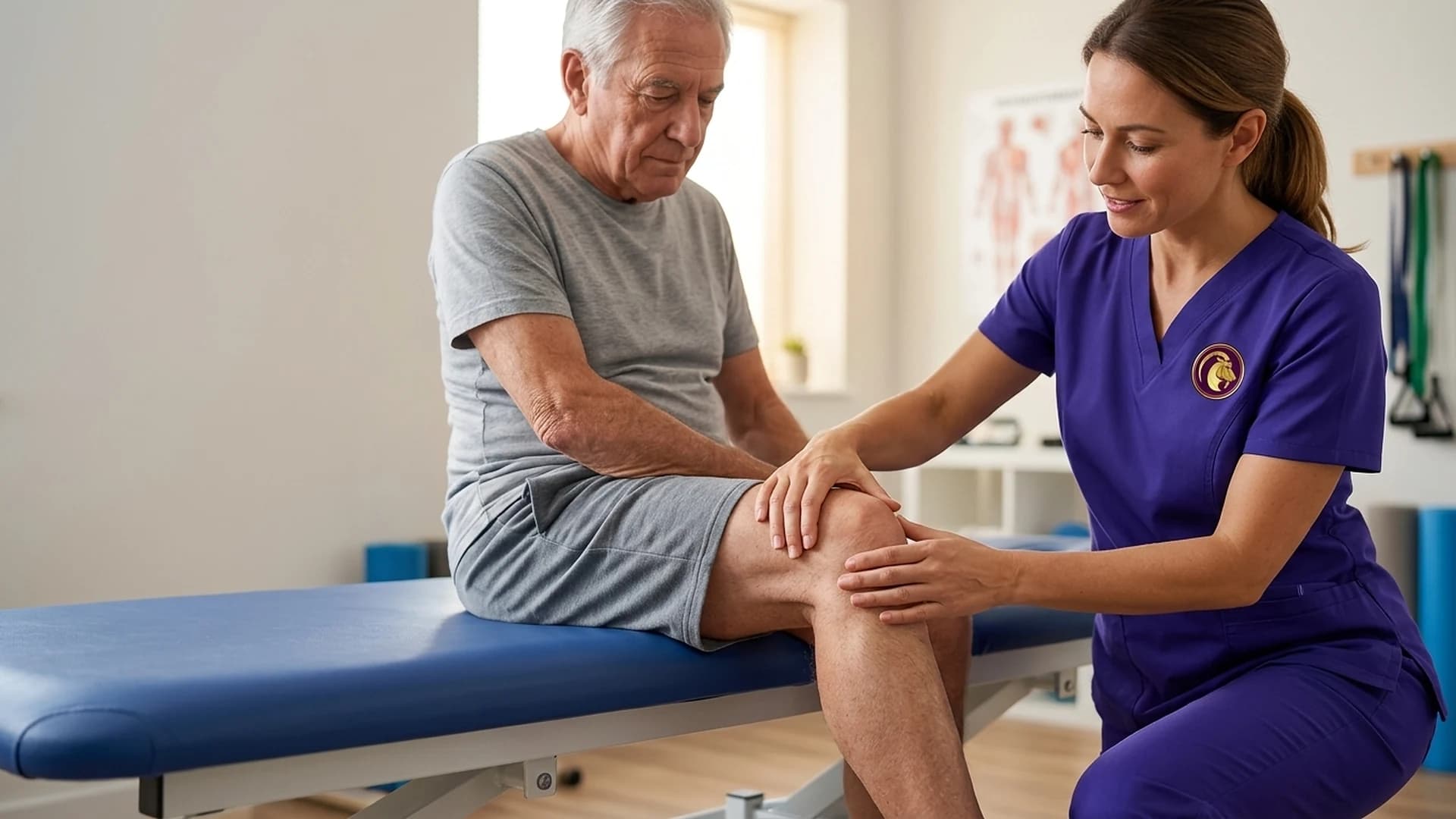
- Patellar and tibiofemoral joint mobilization: Gentle manual glides to improve synovial fluid distribution and capsular compliance
- High-Frequency Therapeutic Ultrasound: Delivering deep micro-massage to reduce chronic intracapsular effusion
- Calibrated TENS and Cryo-compression protocols to control inflammatory flares without systemic medication
- Neuromuscular re-education: Overcoming arthrogenic inhibition to re-engage the vastus medialis oblique under therapist guidance
- Closed-kinetic-chain joint offloading: Guided isometric and axial alignment drills supervised to minimize tibiofemoral peak stress
- Biomechanical gait correction: Prescribing customized unloader braces or foot orthotics to correct medial compartment overload
Home Care & Ergonomic Strategies
Empowering self-management preserves joint health during daily activities:
- Utilize low-impact daily movement (stationary cycling or flat-surface walking) to stimulate chondrocyte nutrition
- Avoid prolonged low-chair sitting; select firm chairs with armrests to minimize joint strain during standing
- Maintain healthy weight management to systematically reduce compressive forces across the knee joint
- Apply localized thermal therapy: Moist heat before morning movement and ice packs after strenuous activity
- Wear supportive footwear with adequate arch support and cushioned heel shock absorbers
- Refrain from unsupervised deep squats or heavy impact loading that provoke articular flare-ups
When to Contact Us
Do not let knee stiffness compromise your independence. Contact Aries PhysioCare to schedule a specialized clinical joint assessment at home and begin a personalized knee preservation program.