



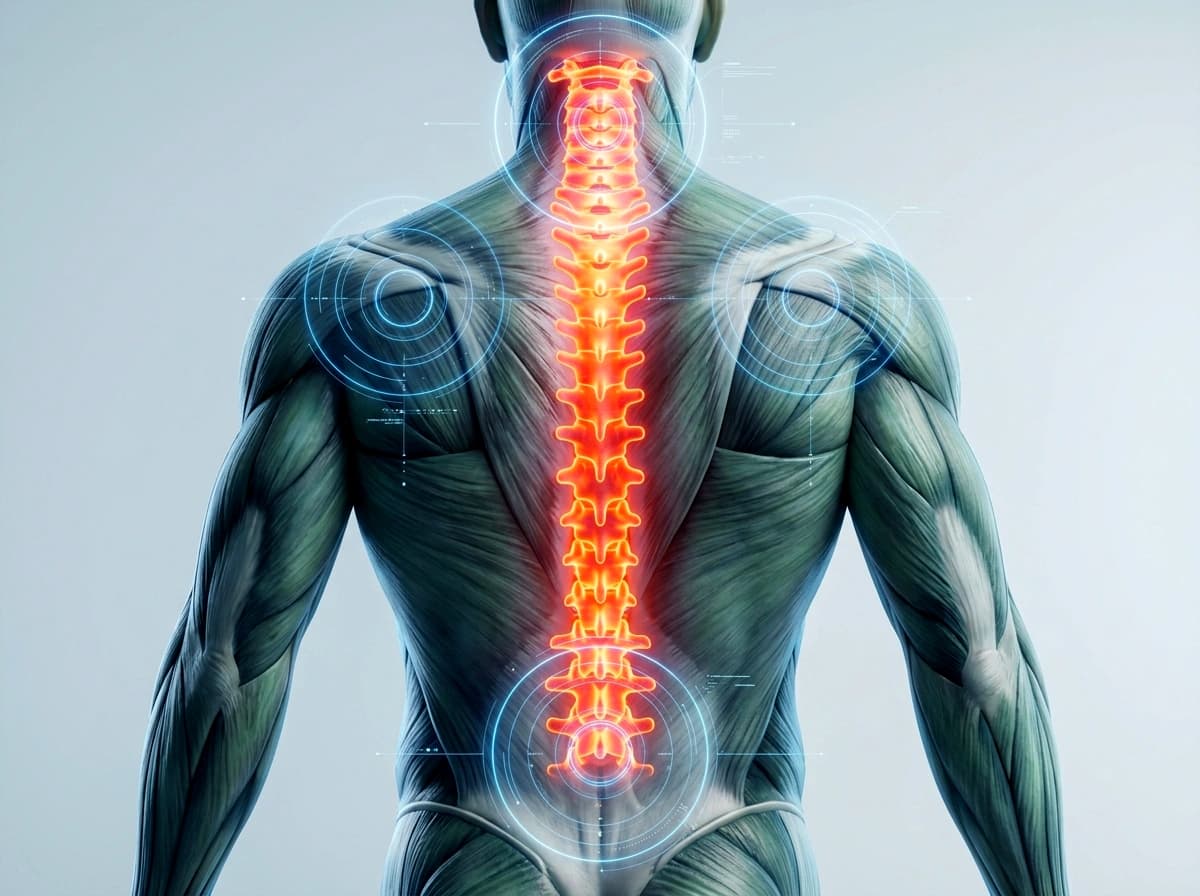
Introduction: Understanding Sacroiliac Joint Dysfunction
The Sacroiliac (SI) joints connect the triangular sacrum at the base of the spine to the iliac bones of the pelvis. Reinforced by some of the strongest ligaments in the human body, these joints transmit massive mechanical forces between the upper body and legs while allowing only 2 to 4 degrees of subtle nutation and counternutation movement. Sacroiliac joint dysfunction occurs when the joint becomes hypermobile (lax), hypomobile (stuck), or inflamed, frequently mimicking lumbar disc herniation or hip pathology.
Common Symptoms of SI Joint Dysfunction
Unilateral pelvic presentation:
- Focal, sharp or dull pain directly over the posterior superior iliac spine (Fortin finger test)
- Pain radiating into the ipsilateral buttock, posterior thigh, or groin
- Worsening of discomfort when climbing stairs, rolling over in bed, or standing on one leg
- Pain when transitioning from sitting to standing
- Sensation of pelvic unsteadiness or uneven leg length when walking
- Tenderness upon palpation over the sacrotuberous and posterior sacroiliac ligaments
- Discomfort after prolonged sitting, especially on hard chairs or with a wallet in the back pocket
Causes & Clinical Diagnosis
Common precipitators:
- Pelvic girdle laxity during pregnancy and postpartum due to the relaxin hormone
- Sudden asymmetrical impact (stepping unexpectedly off a curb or into a pothole)
- Leg length discrepancy or altered gait mechanics following knee/hip injury
- Diagnosis uses the Laslett clinical cluster (Faber, Gaenslen's, Distraction, Thigh Thrust, and Compression tests), where 3+ positive tests confirm SI joint etiology.
Pathophysiology & Biomechanical Impact
Loss of the "form closure" (interlocking bone architecture) or "force closure" (muscular sling coordination of gluteus maximus, latissimus dorsi, and biceps femoris) causes micro-shearing at the auricular joint surfaces, irritating rich intra-articular nociceptors.
Evidence-Based Physiotherapy Protocols
- Manual pelvic repositioning techniques (muscle energy techniques - MET) to correct anterior/posterior innominate rotation
- Targeted activation of the posterior oblique muscular sling (contralateral latissimus dorsi and gluteus maximus)
- Application of an SI joint pelvic stabilization belt during acute hypermobility phases
- Calibrated dry needling or IFT to release secondary piriformis and quadratus lumborum spasms
Home Care & Ergonomic Strategies
- Avoid asymmetrical postures: never cross your legs or stand with all your weight shifted onto one hip
- Sleep with a pillow between your knees and ankles to keep the pelvis horizontally aligned
- Step out of cars by pivoting both legs together rather than swinging one leg out first
- Perform gentle isometric gluteal squeezes and supine bridges daily
When to Contact Us
End frustrating, misdiagnosed pelvic and back pain. Contact Aries PhysioCare for expert in-home sacroiliac joint assessment and specialized pelvic stabilization therapy.