



Introduction: Understanding Sciatica
Sciatica is not a distinct medical diagnosis, but rather a symptom cluster characterizing compression, irritation, or chemical inflammation of the sciatic nerve—the largest and longest nerve in the human body. Originating from lumbar and sacral nerve roots (L4 to S3), the sciatic nerve travels deep through the buttock down to the foot. Symptoms range from a dull buttock ache to excruciating, electric leg pain. Targeted physiotherapy accurately identifies the impingement site and frees the entrapped neural pathway.
Common Symptoms of Sciatica
Unilateral dermatomal nerve pain:
- Sharp, burning, or searing pain traveling down the back of the leg past the knee
- Electric shock sensations triggered by sneezing, coughing, or sitting down
- Numbness and tingling ("pins and needles") in the calf, heel, or toes
- Motor weakness resulting in difficulty pushing off the foot or foot drop
- Constant ache in one side of the buttock
- Difficulty standing upright or walking without limping
- Relief achieved when lying down on the non-painful side
Causes & Clinical Diagnosis
Underlying pathologies:
- Lumbar disc herniation or prolapse compressing L4, L5, or S1 nerve roots (90% of cases)
- Piriformis syndrome: sciatic nerve entrapment beneath or through a tight piriformis muscle
- Lumbar spinal stenosis or degenerative spondylolisthesis
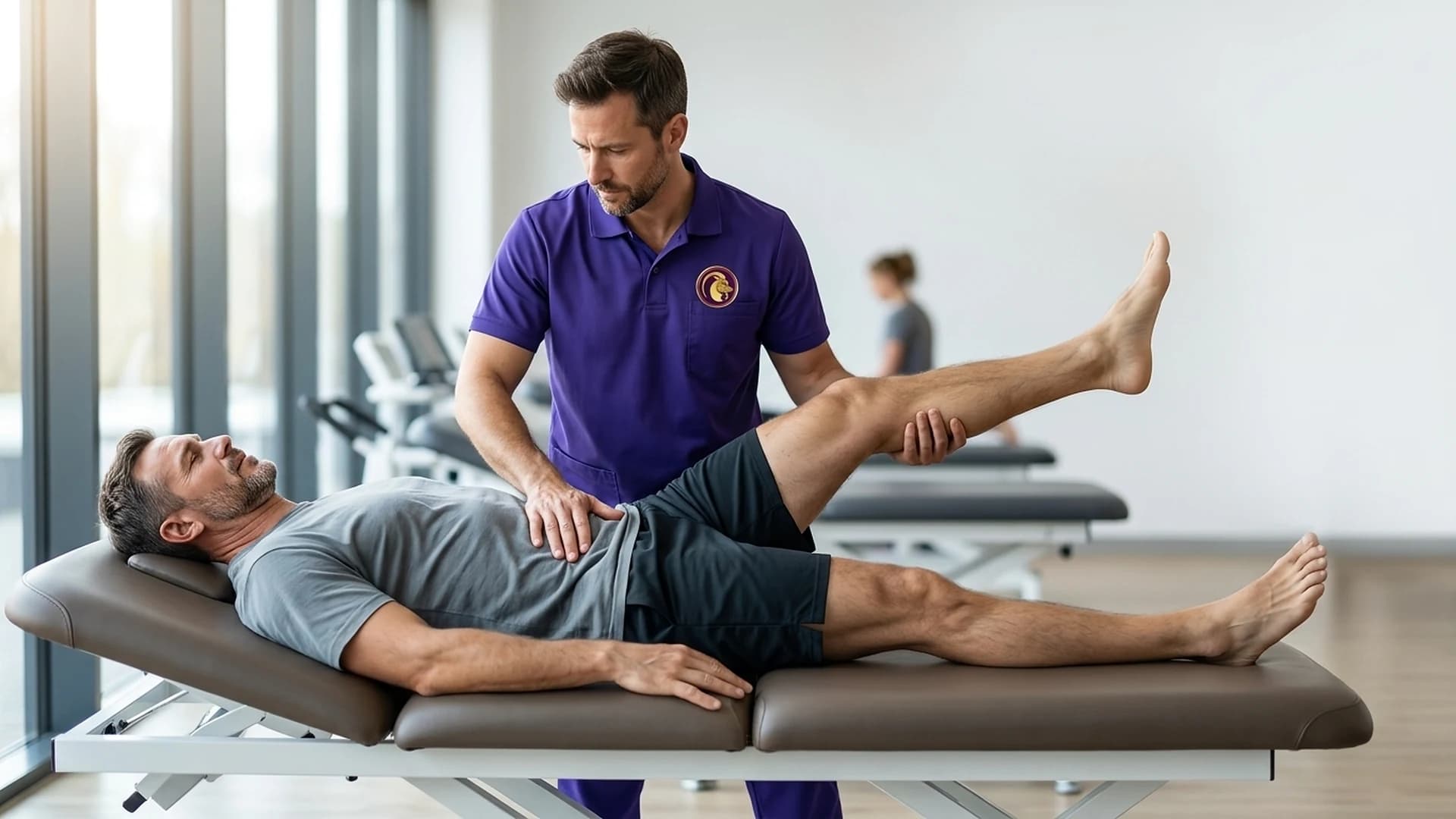
- Diagnosis utilizes neurodynamic testing (Straight Leg Raise, Lasegue's sign, Braggard's test) and diagnostic MRI imaging.
Pathophysiology & Biomechanical Impact
Nerve tissue is highly sensitive to mechanical deformation and ischemic hypoxia. Compression compromises intraneural microcirculation, leading to localized epineurial edema, ectopic pacemaker firing (neuropathic pain), and impaired axonal transport.
Evidence-Based Physiotherapy Protocols
- Neural flossing and nerve slider/tensioner techniques to restore smooth nerve excursion
- McKenzie extension or lateral shift correction to eliminate proximal disc impingement
- Deep gluteal myofascial release and dry needling for piriformis muscle entrapment
- High-frequency IFT electrotherapy to suppress hyperactive neuropathic firing
Home Care & Ergonomic Strategies
- Avoid crossing legs while sitting, which places tension on the sciatic nerve
- Apply cold packs over the lumbosacral region for 15 minutes to reduce acute nerve root swelling
- Perform gentle piriformis stretches and nerve glides only within pain-free boundaries
- Maintain a comfortable walking pace rather than total bed rest
When to Contact Us
End excruciating sciatic nerve pain with expert clinical care. Contact Aries PhysioCare for rapid in-home physiotherapy and comprehensive nerve decompression protocols.