


Introduction: Understanding Thoracic Spine Pain
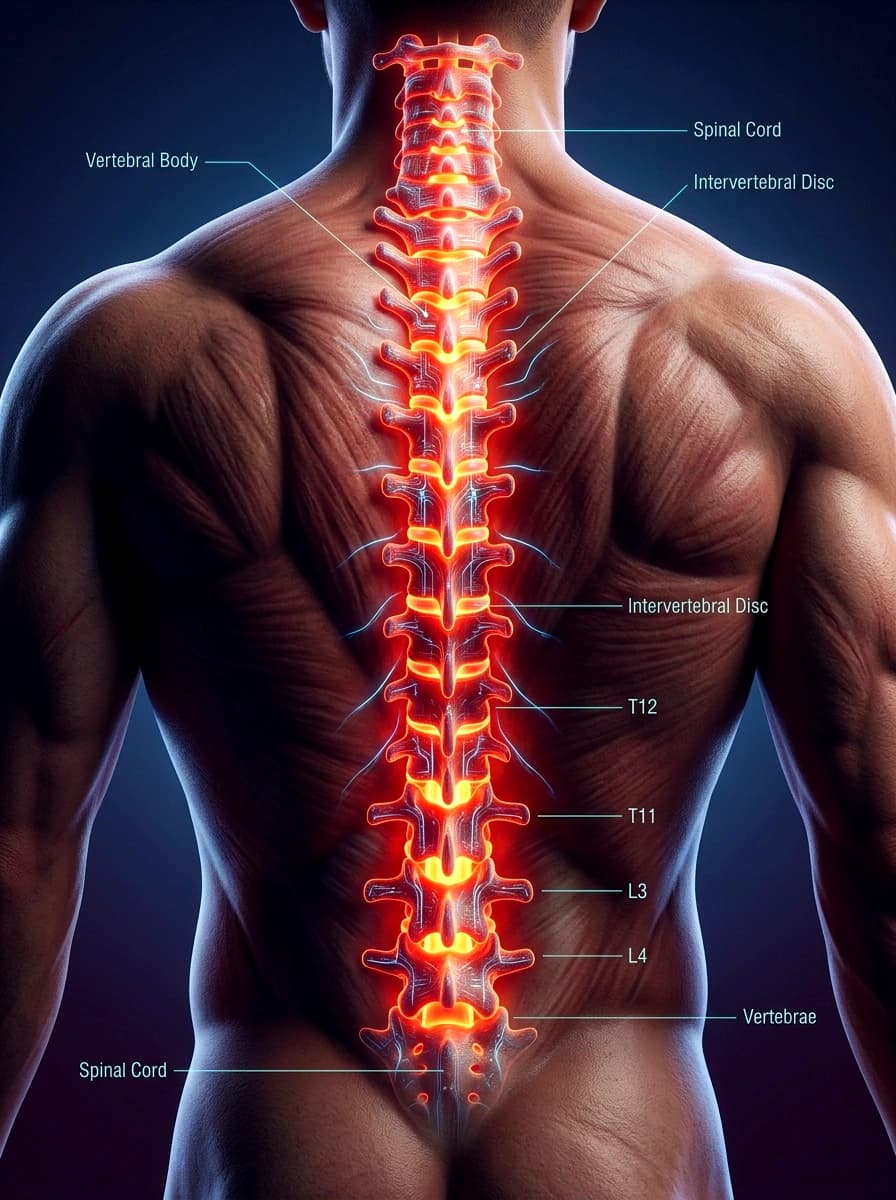
The thoracic spine comprises 12 vertebrae that connect to 12 pairs of ribs, forming the protective cage for your heart and lungs. Because the rib cage provides high inherent stability, the thoracic spine is much less mobile than the cervical or lumbar regions. However, this rigidity makes it prone to severe stiffness, costovertebral joint dysfunction, and painful interscapular muscular strain—frequently aggravated by prolonged hunched sitting, shallow breathing, and rotational sports.
Common Symptoms of Thoracic Spine Pain
Mid-back and rib cage presentations:
- Dull, burning ache between the shoulder blades (rhomboid / interscapular region)
- Sharp, stabbing pain when taking a deep breath, coughing, or sneezing
- Severe restriction when attempting to twist or rotate the upper torso
- Pain wrapping around the rib cage from back to front (costochondritis / intercostal neuralgia)
- Palpable joint stiffness and tenderness over the thoracic spinous processes
- Inability to sit upright without intense mid-back muscle fatigue
- Relief when stretching backward over a foam roller or chair back
Causes & Clinical Diagnosis
Common contributing factors:
- Costovertebral and costotransverse joint subluxation or inflammation
- Prolonged slumped workstation posture creating rigid thoracic kyphosis
- Sudden unaccustomed rotational swings in golf, tennis, or cricket
- Thoracic disc herniation or osteoporotic wedge compression (in seniors)
- Diagnosis includes rib cage spring testing, active thoracic rotation measurements, and ruling out visceral cardiac/gallbladder referral patterns.
Pathophysiology & Biomechanical Impact
When the thoracic spine loses its natural rotational and extension capacity, the body compensates by over-rotating the cervical and lumbar spines. This compensatory hypermobility accelerates degenerative wear in the neck and lower back while leaving the mid-back chronically locked.
Evidence-Based Physiotherapy Protocols
- Maitland posterior-to-anterior (PA) oscillatory mobilizations to restore thoracic facet glide
- Costovertebral rib joint mobilizations paired with active deep breathing
- Myofascial trigger point release for the rhomboids, middle trapezius, and erectors
- Dynamic open-book thoracic rotations and foam roller thoracic extension drills
Home Care & Ergonomic Strategies
- Lie supine over a foam roller placed horizontally across the mid-back, performing gentle extensions
- Take 10 deep diaphragmatic breaths hourly, consciously expanding the lateral rib cage
- Adjust workstation chair armrests to properly support forearms, offloading the upper back
- Perform the "thread-the-needle" yoga pose daily to maintain rotational thoracic mobility
When to Contact Us
Breathe freely and move without mid-back catching. Contact Aries PhysioCare for specialized in-home thoracic spine physiotherapy and manual joint restoration.