

Introduction: Understanding Degenerative Disc Disease
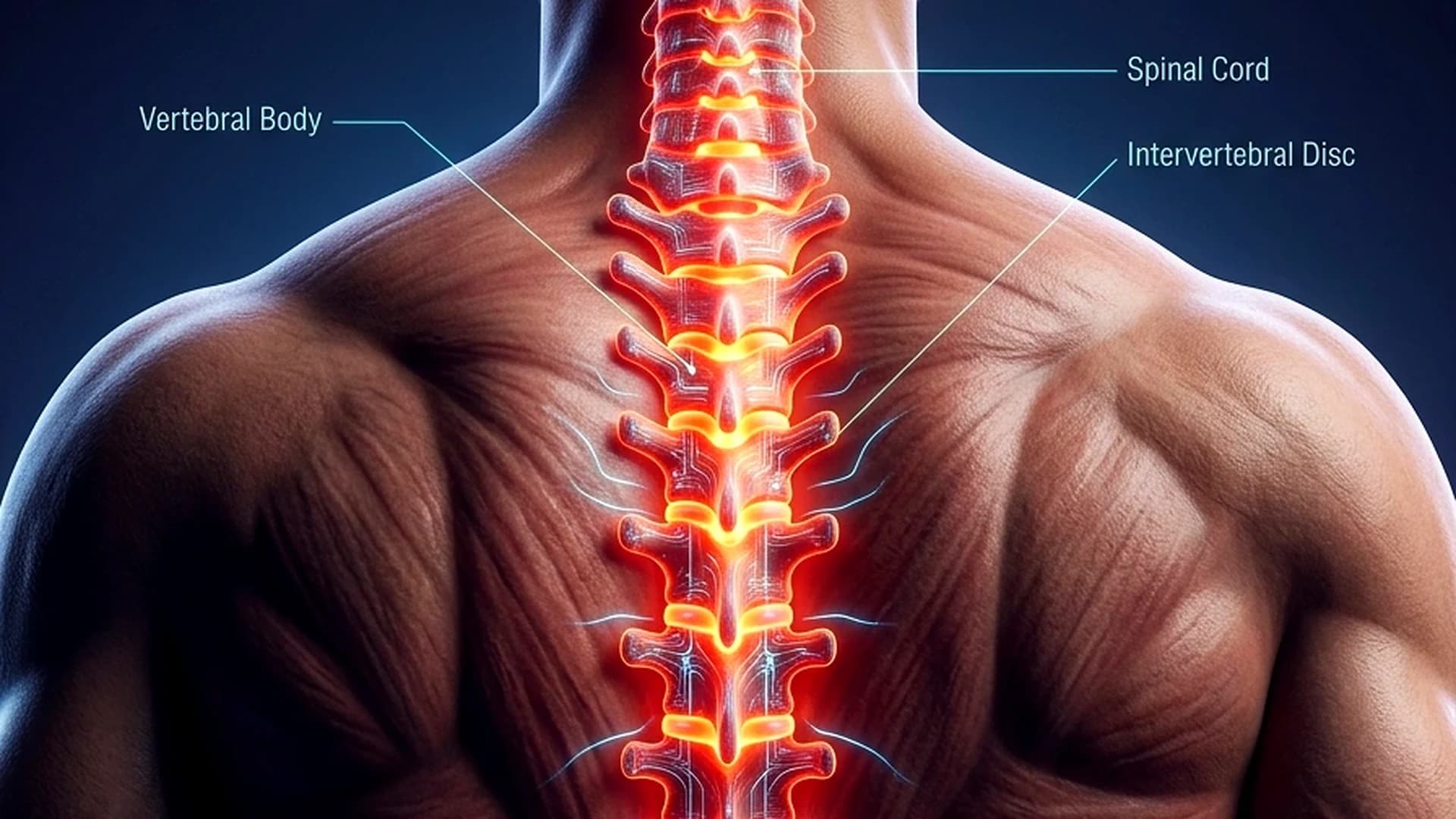
Degenerative Disc Disease (DDD) is a prevalent condition affecting the intervertebral fibrocartilaginous cushions that articulate and shock-absorb the spinal column. Over time, progressive cellular dehydration, loss of proteoglycan content, and reduced disc height compromise segmental stability. While age-related cellular desiccation is universal, pain develops when structural disc height loss creates micro-instability, abnormal stress distribution across adjacent facet joints, and neural foraminal narrowing. Modern clinical evidence demonstrates that comprehensive conservative physiotherapy and targeted spinal offloading restore functional mobility and alleviate discomfort without surgical intervention.
Common Symptoms
Degenerative disc symptoms vary according to the affected spinal segment and neural involvement:
- Persistent axial aching in the lower back or neck aggravated by sustained sitting
- Deep morning stiffness that eases gradually with gentle walking and warmth
- Focal tenderness along the paraspinal muscles with compensatory muscle guarding
- Radiating discomfort into the buttocks or shoulders during prolonged axial loading
- Intermittent sharp catches during transition from sitting to standing
- Temporary symptom relief when lying recumbent or unweighting the spine
- Reduced spinal rotational flexibility and sensation of spinal fatigue by late afternoon
Causes & Clinical Diagnosis
The pathogenesis of disc degeneration involves multifactorial biomechanical and metabolic stressors:
- Age-related reduction in disc vascularity and nutrient diffusion through the vertebral endplates
- Chronic uncorrected sedentary postures placing continuous hydrostatic pressure on the posterior annulus
- Repetitive occupational torsional strain or heavy lifting with poor lumbopelvic mechanics
- Genetic predisposition to premature proteoglycan breakdown
- Clinical diagnosis entails physical examination (range of motion, spinal percussion, Slump test, and dermatomal/myotomal neuro-screens) alongside weight-bearing X-rays and MRI to assess disc hydration and disc-space height.
Pathophysiology & Biomechanical Impact
As intervertebral discs lose fluid volume, the nucleus pulposus can no longer distribute axial loads symmetrically across the vertebral endplates. The tough outer annulus fibrosus bears excessive compressive and shear forces, developing circumferential micro-fissures. Consequently, the posterior zygapophyseal (facet) joints undergo compensatory hyper-mobility and hypertrophy, precipitating facet arthropathy, osteophyte development, and narrowing of the intervertebral foramina.
Evidence-Based Physiotherapy Protocols
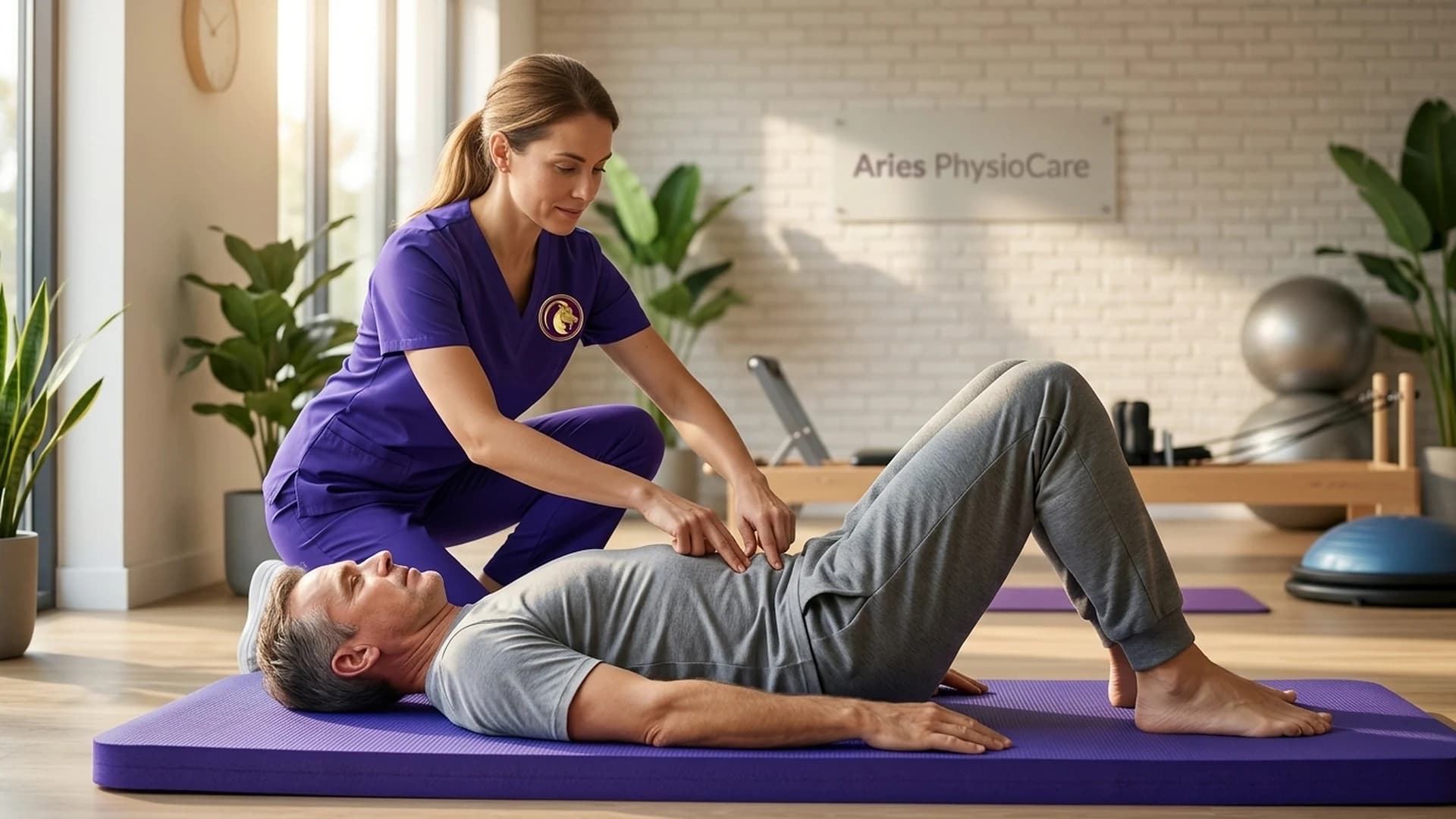
At Aries PhysioCare, clinical management focuses on restoration of disc imbibition, joint offloading, and neuromuscular stabilization under physical therapist guidance:
- Comprehensive Mechanical Diagnosis and Therapy (MDT) to determine individual directional preferences
- Manual therapy: Gentle grade I-III Maitland mobilizations to restore facet glide and decrease protective spasm
- Clinical electrotherapy: Calibrated Interferential Therapy (IFT) and Class-IV Deep Tissue Laser to stimulate local microcirculation and relieve deep muscular hypertonicity
- Specialized spinal traction: Controlled manual axial decompression to momentarily expand the intervertebral foramina
- Supervised motor control retraining: Activation of the transverse abdominis, lumbar multifidus, and pelvic diaphragm in neutral spinal postures
- Objective criteria-based progression from gentle unweighted postures to functional daily movement patterns
Home Care & Ergonomic Strategies
Sustainable long-term spine health requires proactive daily habit adjustments:
- Configure ergonomic workstations with lumbar lordotic roll support, elbow rests at 90 degrees, and monitor at eye level
- Implement active micro-breaks: Alternate between seated and standing positions every 45 minutes
- Maintain adequate daily hydration to support cellular osmotic balance in vertebral tissues
- Adopt spine-sparing sleep ergonomics: Supportive orthopedic mattress paired with a pillow between knees (side sleeping) or under knees (supine)
- Apply thermal contrast modalities: Moist heat for morning paraspinal tightness and localized cold therapy after physical exertion
- Avoid unsupervised high-impact twisting movements or heavy spinal flexion loading
When to Contact Us
Do not let chronic spinal stiffness restrict your daily life. Contact Aries PhysioCare to schedule a thorough clinical evaluation at home or in our specialized clinics, and receive a customized, non-surgical disc restoration plan.